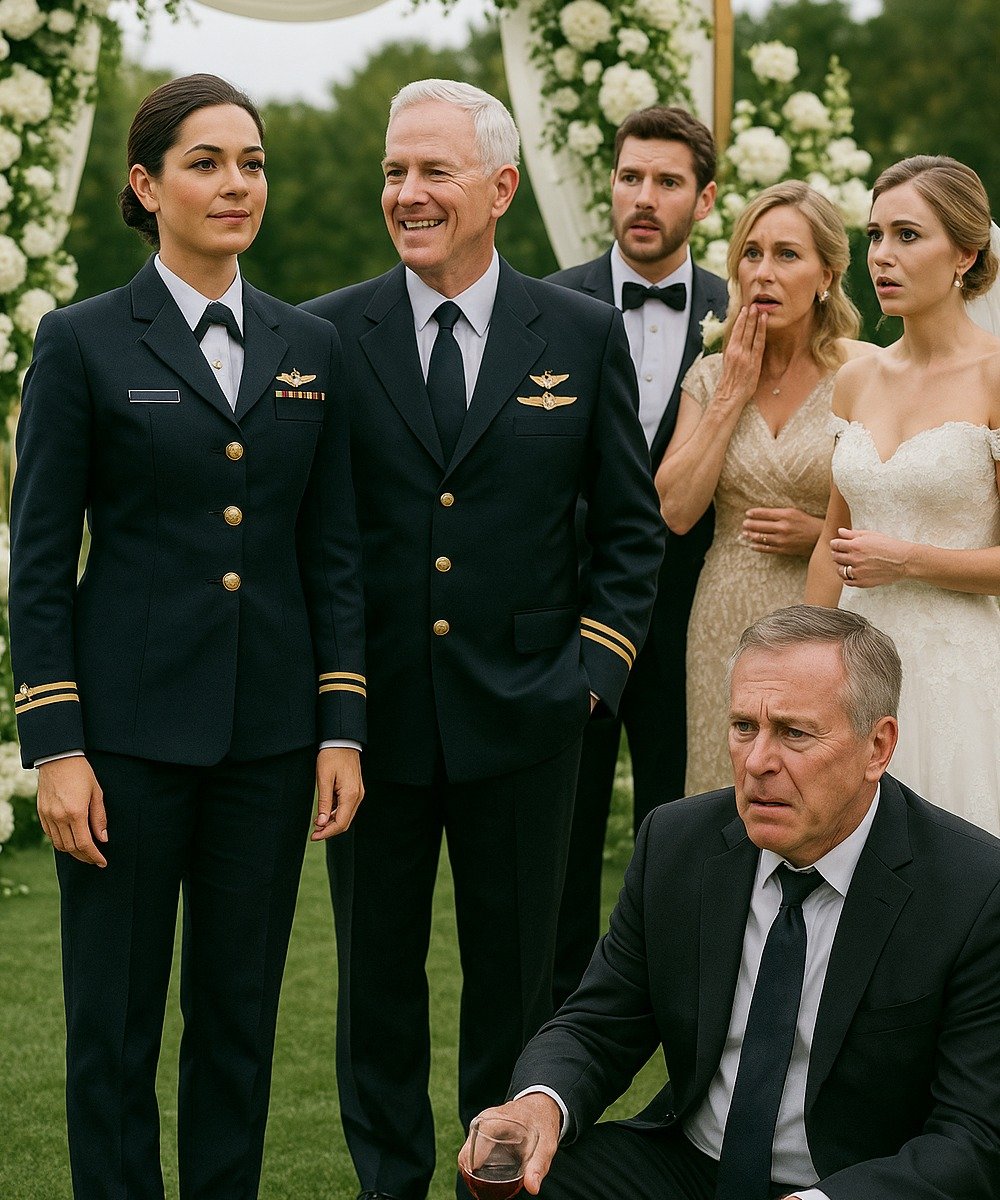
When the ceremony began, the officiant paused mid-sentence after whispering with the General. Then, to the confusion of the guests, he said, “Please stand. The Lieutenant Commander is present.”
I stayed at the back, under an old oak tree, standing at attention. I didn’t speak, didn’t gloat. The respect that filled the air wasn’t mine to command — it was something earned by every man and woman who had ever served. But in that instant, I felt it settle on me like a benediction.
Down front, my father’s face went pale. His wine glass slipped from his hand, staining the grass. My mother froze, hand trembling at her pearls. Mateo’s jaw tightened. The performance was over.
The illusion cracked.
The Days That Followed
In the days after, I received the predictable message from my mother: Your father’s blood pressure spiked. The scene you caused has been devastating. I hope you’re happy.
I deleted it. The old Sofía would have apologized. But I wasn’t her anymore.
Rumors spread through Miami’s elite circles. The story of the “family’s mistake” — who turned out to be a Navy officer saluted by a General — became the talk of their dinner tables. My father’s empire didn’t collapse overnight, but something more painful happened: he lost the admiration he valued most. Invitations slowed. Partners stopped calling. The silence he had once used to punish me now surrounded him.
Then came an email from General Thompson:
“Lieutenant Commander Gaviria,
Please forgive any disruption my recognition may have caused. You serve this country with distinction, and that honor stands, whether others see it or not.”
Letting Go
Months later, my mother came to my door holding an envelope — a check large enough to change my life once. She didn’t come for reconciliation; she came for peace of appearances.
I looked at her, then at the check, and said gently, “I don’t need this, Mom. I’m fine.”
Her face crumpled, not in sadness but confusion. Love, to her, had always been transactional. When I closed the door, it wasn’t anger that filled me. It was release.
Finding Home at Sea
A year later, I stood on the bridge of a destroyer as the sun sank into the Indian Ocean. My cousin had sent a photo of the “Achievement Wall” back home — now featuring a framed picture of me in uniform, placed proudly in the center.
I smiled faintly. That wall, that house, that family — they no longer defined me. My peace didn’t come from being displayed. It came from knowing who I was when no one was watching.
What That Day Taught Me
That wedding didn’t just reveal my father’s cruelty — it revealed my strength.
For years, I believed if I achieved enough, they would finally see me. But self-worth isn’t something others can grant or withhold. It exists quietly, independent of approval.
Family, I learned, isn’t about shared blood. It’s about shared respect. The people who stand beside you when you have nothing to offer but truth — those are your people. For me, they wear uniforms, call each other by rank, and understand that honor has nothing to do with wealth.
My father’s world still gleams with luxury and noise, but I no longer orbit around it. I have built a life defined by purpose, peace, and authenticity — a world where I no longer need their applause to know my worth.
That, I’ve learned, is the greatest victory of all.
